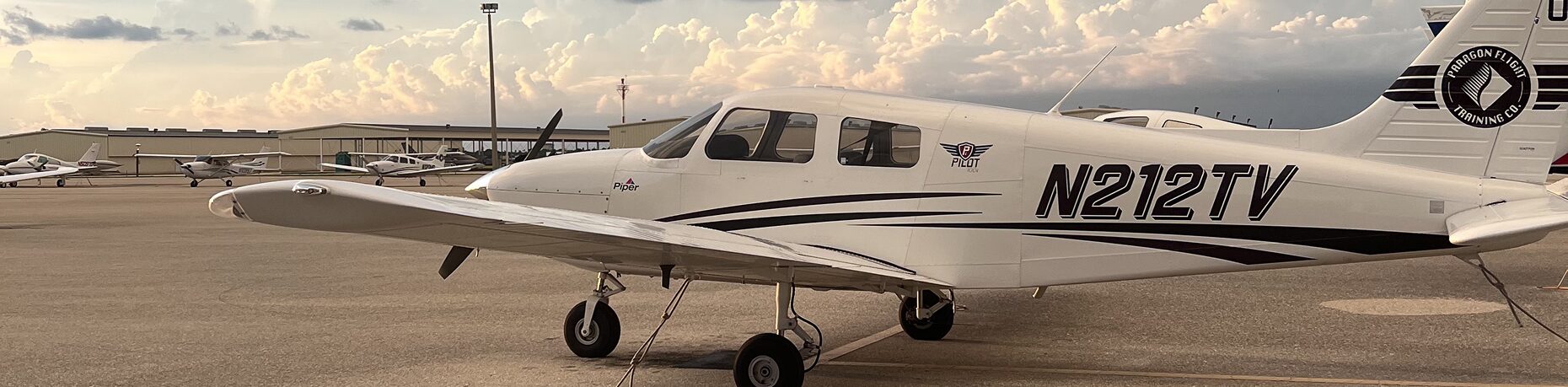


Choosing a Flight School in Florida Versus Arizona?

Both states are popular training destinations thanks to their favorable weather and strong aviation programs. However, two often-overlooked factors — geography and airspace — can significantly impact your progress, safety, and real-world readiness.
Explore how these factors influence flight training and why Paragon Flight, based in Southwest Florida, offers a clear advantage.
The Geography
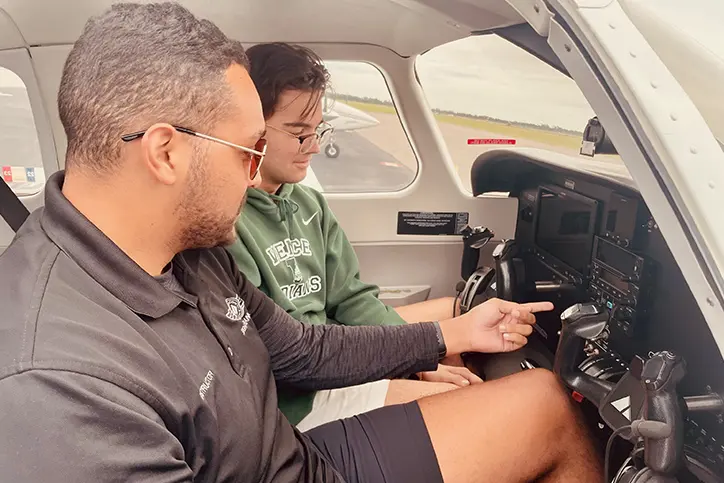
The terrain and altitude of your training environment can either streamline progress or introduce unnecessary challenges.
Arizona: Arizona’s mountainous geography and high-altitude airports can provide advanced experience, but they also present unique challenges for newer pilots:
- High-density altitude during hot months decreases aircraft performance and limits training windows.
- Mountainous terrain adds complexity to navigation and emergency planning.
- Remote training areas reduce air traffic control ATC interaction and increase travel time between training zones.
These environmental factors may provide valuable experience for advanced pilots but can increase the learning curve, add risk during early solo flights, and extend both the duration and cost of training for new students. While these conditions may build skill over time, they can slow down early progress, increase solo readiness time, and potentially raise the overall cost of training.
Florida: Florida offers one of the most forgiving and consistent training environments in the U.S., with:
- Sea-level airports that optimize aircraft performance year-round
- Flat, open terrain that reduces geographic hazards and turbulence
- Minimal natural obstacles and reliable weather that make early training safer and less stressful
- Ideal conditions for VFR navigation, especially for students working toward their Private Pilot License.
Whether you’re just starting or building advanced hours, Florida’s geography supports faster, safer, and more efficient flight training.
The Airspace
Airspace structure shapes how and where you learn to fly. A mix of controlled and uncontrolled airspace is ideal for students to build confidence in different environments.
Arizona: Most flight schools in Arizona are based at smaller regional airports, often situated far from the state’s main commercial hubs in Phoenix and Tucson.
While the clear skies and low traffic volume provide ample uninterrupted practice time, the surrounding airspace tends to be remote and sparsely populated. This limits students’ chances to interact frequently with air traffic control or navigate busy traffic environments, which can restrict the development of crucial communication and situational awareness skills needed for professional aviation.
Florida: As one of the world’s most active aviation hubs, Florida provides an exceptional training environment for student pilots.
Proximity to major commercial hubs like Miami, Orlando, and Southwest Florida International provides exposure to complex traffic patterns and real-world ATC communication. Training in Class C and D airspace builds confidence in towered environments, while nearby Class E and G airspace allows for solo flights and non-towered operations in lower-pressure settings.
This diverse airspace helps students develop essential skills for everything from cross-country flights to airline-style operations in a safe and supportive environment.
Why Choose Paragon Flight?
As one of the nation’s premier flight schools, we offer flexible, FAA-approved Part 141 and Part 61 programs to match your personal or professional aviation goals.
At campuses in Fort Myers and Punta Gorda, Paragon Flight students benefit from:
- Modern fleets of technically advanced aircraft (TAA) and full-motion flight simulators
- Expert FAA-certified instructors who bring real-world experience to every lesson
- Customizable training schedules that work with your timeline
- Affordable training options, including financial aid and financing
Combined with Florida’s ideal geography and diverse airspace, Paragon creates the perfect environment to develop skills, build confidence, and prepare for a successful aviation career.
Still deciding between Florida versus Arizona for flight school? Contact Paragon Flight online or call (239) 274-3170 to speak with an advisor, get answers to your questions, and explore a customized training plan that fits your goals, budget, and timeline.
Popular Posts