
Commercial Flight Training in Calera, Alabama
Students exploring commercial flight training in Calera, Alabama, often begin by looking for nearby options. While proximity is convenient, it does not always lead to the most efficient or effective training experience. Consistency, structured instruction, and access to a complete training pathway have a greater impact on the speed of students’ progress.
For those in the Calera area, Paragon Flight Training offers a career-focused option at LaGrange-Callaway Airport (LGC), located within driving distance and designed to support consistent, uninterrupted flight training.
A Training Environment Built for Efficiency
LaGrange-Callaway Airport provides a controlled airspace environment without the congestion of larger metropolitan airports. Students gain experience communicating with air traffic control and operating under controlled conditions while avoiding long delays on taxiways or in obtaining departure clearance.
The airport features two asphalt runways and multiple instrument approaches, including ILS, VOR, and GPS. This allows students to train in both visual and instrument conditions and develop a well-rounded operational skill set.
Consistent Flight Training and Scheduling
Training frequency directly affects how efficiently students complete their certifications. At LGC, favorable weather supports more than 300 VFR days each year, allowing for regular flight training and predictable scheduling.
Consistent flight time helps students retain skills, reduce the need for repeated instruction, and move through each stage of training without unnecessary setbacks. This continuity plays a major role in both cost control and timeline efficiency.
Structured Commercial Pilot Training
Paragon Flight’s commercial training program is built around a progression-based approach designed to prepare students for professional aviation. Training includes both Commercial Single-Engine (CSEL) and Commercial Multi-Engine (CMEL) certifications.
Students complete complex cross-country flights, commercial-level operations, and advanced maneuvers while training in aircraft equipped with modern avionics. The curriculum follows FAA standards while emphasizing precision, consistency, and real-world application.
In addition to technical skills, the program focuses on decision-making, communication, and situational awareness. These are essential for safe and effective operation in professional flying environments.
Flexible Training Paths
Commercial training at Paragon Flight is available under both FAA Part 141 and Part 61 pathways, allowing students to choose the format that best aligns with their goals and schedule.
Part 141 follows a structured, full-time curriculum with defined stages and regular progress checks. This format supports students pursuing aviation careers on a clear timeline. Paragon’s Professional Pilot Program offers an accelerated option, allowing students to progress from zero experience to a commercial pilot with instructor ratings in under 10 months.
Part 61 provides greater flexibility, allowing students to adjust pacing and scheduling based on availability and prior experience.
Both pathways lead to the same commercial pilot certifications, ensuring consistent training standards regardless of format.
Modern Aircraft and Simulator Training
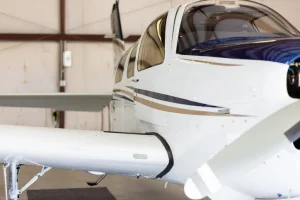
Training is conducted in a standardized all-Piper fleet, including the PA-28 Pilot 100 for primary and single-engine training and the PA-44 Seminole for multi-engine training. Consistent aircraft configuration improves learning efficiency and reduces transition time between training stages.
Simulator training is integrated using the ALSIM AL100, an FAA-approved device that mirrors the aircraft cockpit. This allows students to practice procedures, refine skills, and log qualifying hours in a controlled environment while reducing overall training costs.
A Defined Path Beyond Certification
Paragon’s training model is designed to support progression beyond initial certification. After completing commercial training, students can continue into instructor ratings, including CFI, CFII, and MEI.
This provides a direct path to building flight hours while gaining experience. For many students, this step is essential for transitioning into professional aviation roles.
Choose a Program That Supports Progress
When evaluating commercial flight training in Calera, Alabama, the most important factor is how effectively a program supports consistent progress and long-term career development. Paragon Flight Training combines structured programs, reliable training conditions, and a clear pathway forward.
To learn more or schedule a campus visit, contact Paragon Flight Training and take the next step toward your aviation career.